The mechanical, physical, and chemical properties of aluminum alloys depend on their composition and microstructure. Adding specific elements to pure aluminum can significantly enhance its performance and utility. Therefore, the vast majority of aluminum applications use alloys containing one or more added elements. The common major alloying additions to aluminum are copper, manganese, silicon, magnesium, and zinc, with total contents up to 10% of the alloy composition (all percentages are mass fractions unless otherwise stated). Impurity elements are also present in aluminum alloys, but their total content is usually below 0.15%.
Antimony (Sb)
Commercial purity aluminum typically contains trace antimony (0.01–0.1 ppm). Antimony has very low solid solubility in aluminum (<0.01%). It has been added to aluminum-magnesium alloys, reportedly forming a protective antimony oxychloride film that improves corrosion resistance in salt water. Some bearing alloys contain up to 4–6% antimony. It can also replace bismuth to suppress hot cracking tendency in aluminum-magnesium alloys.
Arsenic (As)
Arsenic forms an AlAs semiconductor phase with aluminum. Arsenic oxides (e.g., AsO₃³⁻) are highly toxic, so its content must be strictly controlled at very low levels in alloys for food packaging foil.
Beryllium (Be)
Beryllium is often added to magnesium-containing aluminum alloys to reduce oxidation rates at high temperatures. In steel hot-dip aluminizing baths, up to 0.1% Be improves adhesion of the aluminum coating to the steel substrate and suppresses the formation of harmful iron-aluminum intermetallic compounds, by diffusing to the surface and forming a protective layer. Adding trace beryllium to aluminum-magnesium wrought alloys significantly reduces high-temperature oxidation and discoloration of the product, through the surface diffusion of beryllium to form a high-volume-fraction oxide film. Beryllium has no effect on corrosion resistance of aluminum alloys; its content is typically kept below 8 ppm in welding filler alloys, and it must be strictly limited in weldable aluminum-magnesium wrought alloys.
Beryllium toxicity: Berylliosis is an allergic disease related to individual hypersensitivity, influenced by exposure intensity and duration. Inhalation of dust containing beryllium compounds can cause acute beryllium poisoning, so beryllium is prohibited in aluminum alloys that contact food or beverages.
Bismuth (Bi)
Low-melting-point metals such as bismuth, lead, tin, and cadmium are added to aluminum to produce free-machining alloys. These elements have limited solid solubility in solid aluminum and form soft, low-melting-point phases that promote chip breakage during machining and lubricate the cutting tool. An advantage of bismuth is its volume expansion during solidification, which compensates for the solidification shrinkage of lead. In Al-Cu alloy 2011 and Al-Mg-Si alloy 6262, lead and bismuth are typically added in a 1:1 ratio. Adding trace bismuth (20–200 ppm) to aluminum-magnesium alloys counteracts the harmful effect of sodium and suppresses sodium-induced hot cracking.
Boron (B)
Boron is used as a grain refiner in aluminum and its alloys. It also improves electrical conductivity by precipitating elements such as vanadium, titanium, chromium, and molybdenum, which when present as common impurities in commercial-purity aluminum are detrimental to conductivity. Boron can be added alone at 0.005%–0.1% as a grain refiner during solidification; its effectiveness is better when used with excess titanium. The common Ti:B ratio in industrial grain refiners is 5:1. Boron has a high neutron capture cross-section, so some aluminum alloys are boron-doped for nuclear applications; however, in reactor-relevant conditions this property is not desired, and boron content must be kept extremely low.
Cadmium (Cd)
Cadmium is a low-melting-point element with limited application in aluminum alloys. Adding up to 0.3% Cd to Al-Cu alloys accelerates age hardening, increases strength, and improves corrosion resistance. Adding 0.005%–0.5% Cd to Al-Zn-Mg alloys shortens aging time. Studies show that trace cadmium reduces the corrosion resistance of pure aluminum, and above 0.1% Cd can cause hot shortness in some aluminum alloys. Cadmium has a high neutron absorption cross-section, so its content must be controlled in nuclear-grade aluminum alloys. Cadmium can also impart free-machining properties to aluminum alloys, especially Al-Zn-Mg alloys; because its melting point is higher than bismuth and lead, cadmium is a better additive for machinability – only 0.1% Cd improves cutting performance. Cadmium is also used with silicon in bearing alloys. Cadmium compounds are highly toxic when ingested, and cadmium oxide fumes present health hazards during melting, casting, and fluxing operations.
Calcium (Ca)
Calcium has very low solid solubility in aluminum and forms the intermetallic compound CaAl₄. A type of aluminum alloy containing about 5% Ca and 5% Zn exhibits unique superplasticity. Calcium combines with silicon to form CaSi₂, which is nearly insoluble in aluminum, thereby slightly improving the electrical conductivity of commercial-purity aluminum. In Al-Mg-Si alloys, calcium reduces age hardening; in Al-Si alloys, calcium increases strength but decreases elongation and does not render the alloy heat-treatable. Adding 0.2% Ca to 3003 aluminum alloy alters its recrystallization behavior. Introducing very low levels of calcium (10 ppm) into molten aluminum increases its tendency to absorb hydrogen.
Carbon (C)
Carbon is an uncommon impurity in aluminum, mainly present as oxycarbides and carbides, the most common being Al₄C₃. Carbon can also form carbides with other impurities such as titanium. Al₄C₃ decomposes in the presence of water or water vapor, potentially leading to pitting corrosion on the aluminum surface. Conventional molten aluminum handling and fluxing operations typically reduce carbon content to parts-per-million levels.
Cerium, Chromium, Cobalt, Copper (Alloying Elements in Aluminum Alloys)
Cerium (Ce)
Cerium is usually added as mischmetal (50–60% Ce). It has been experimentally added to casting aluminum alloys to improve fluidity and reduce die sticking. Studies suggest that in aluminum alloys with high iron (0.7%), cerium transforms the needle-like FeAl₃ iron-aluminum compound into a non-acicular compound. Cerium is also used in rapidly solidified powder metallurgy (RS-P/M) aluminum alloys (e.g., alloy 8019, Al-9Fe-4Ce), where it forms thermally stable dispersoid particles.
Chromium (Cr)
Chromium is a trace impurity in commercial-purity aluminum (5–50 ppm) and significantly affects electrical resistivity. Chromium is a common addition (typically ≤0.35%) to Al-Mg, Al-Mg-Si, and Al-Mg-Zn alloys. Above this limit, chromium readily forms coarse intermetallic compounds with other impurities or additions such as manganese, iron, and titanium; the limit decreases further as transition metal content increases. In casting alloys, excess chromium can precipitate during holding via peritectic reaction, forming dross-like inclusions.
Chromium diffuses slowly in aluminum and forms fine dispersoids in wrought alloys, which inhibit nucleation and grain growth. Its main role is to control grain structure: preventing grain growth in Al-Mg alloys and suppressing recrystallization during hot working or heat treatment of Al-Mg-Si or Al-Zn alloys. The resulting fibrous structure reduces stress corrosion susceptibility or improves toughness. Both solid-solution chromium and fine dispersoids slightly increase strength. A major drawback in heat-treatable alloys is that chromium increases quench sensitivity because the hardening phase tends to precipitate on existing chromium-phase particles. Chromium also imparts a yellow color to anodic oxide films.
Cobalt (Co)
Cobalt is not a conventional addition to aluminum alloys. In some iron-containing Al-Si alloys, cobalt transforms the needle-like β phase (Al-Fe-Si compound) into a more rounded Al-Co-Fe phase, improving strength and elongation. Through rapid solidification powder metallurgy, Al-Zn-Mg-Cu alloys containing 0.4%–1.5% Co (e.g., 7090, 7091) have been produced, where cobalt forms Co₂Al₉ or (Co,Fe)₂Al₉ particles uniformly dispersed; these dispersoids refine grain size, thereby enhancing high strength, ductility, and resistance to stress corrosion cracking.
Copper (Cu)
Al-Cu alloys with 2–10% Cu (usually with other alloying elements) constitute an important alloy system. Cast and wrought Al-Cu alloys, after solution heat treatment and subsequent aging, show significant increases in strength and hardness, while elongation decreases; optimum strengthening occurs at 4–6% Cu (the exact value depends on other elements). Figure 10 summarizes properties of Al-Cu alloy sheet under various heat treatments. The aging behavior of binary Al-Cu alloys is the most studied among all aluminum alloy systems, but binary Al-Cu alloys are rarely used industrially; most commercial Al-Cu alloys contain other elements.
Copper-Magnesium System
Adding magnesium to Al-Cu alloys primarily provides strength improvement after solution heat treatment and quenching. Some wrought alloys of this type, after room-temperature aging, exhibit increased strength while retaining good ductility; artificial aging further increases strength (especially yield strength) but significantly reduces tensile elongation.
Only about 0.5% Mg added to cast and wrought Al-Cu alloys effectively changes their aging behavior. For wrought products, cold working before aging maximizes the strengthening effect of magnesium in the artificially aged condition. Cold working also affects the strength of naturally aged Al-Cu alloys, regardless of magnesium addition. The effect of magnesium on corrosion resistance depends on product type and heat treatment.
Copper-Magnesium with Other Elements
Cast Al-Cu-Mg alloys containing iron offer dimensional stability, good bearing properties, and retain high strength and hardness at elevated temperatures. However, in wrought Al-4%Cu-0.5%Mg alloys, even as little as 0.5% Fe reduces tensile properties in the heat-treated condition unless sufficient silicon is present to combine the iron into α iron-silicon phase. Excess iron combines with copper to form Cu₂FeAl₇, thereby reducing the copper available for heat treatment. When adequate silicon is present to fully combine with iron, properties are not affected. Additionally, silicon can combine with magnesium to form Mg₂Si precipitates that participate in age hardening.
Silver significantly increases the strength of solution-treated and aged Al-Cu-Mg alloys. Nickel improves high-temperature strength and hardness of cast and wrought Al-Cu-Mg alloys; but adding about 0.5% Ni to wrought Al-4%Cu-0.5%Mg reduces its room-temperature tensile properties in the heat-treated condition.
Manganese-containing Al-Cu-Mg alloys are the most important and widely used high-strength wrought alloy system in industry. Generally, increasing magnesium and/or manganese increases tensile strength and, to a lesser extent, yield strength. Cold working after heat treatment further increases tensile strength (especially yield strength). Manganese and magnesium additions reduce formability, and manganese also reduces ductility, so its content in industrial alloys is usually ≤1%. Adding cobalt, chromium, or molybdenum to wrought Al-4%Cu-0.5%Mg alloys improves heat-treated tensile properties, but none shows a clear advantage over manganese.
To meet automotive industry requirements for formability, Al-Cu-Mg alloys with lower copper than traditional 2024 and 2014 have been developed, such as modified 2002 and 2036 alloys. These offer adequate formability, good spot weldability, good fusion weldability, corrosion resistance, and no Lüders lines after forming; the paint-baking cycle simultaneously serves as an aging treatment to achieve final mechanical properties.
Copper with Trace Additions
One interesting wrought alloy system contains multiple trace metals (manganese, titanium, vanadium, or zirconium) that increase the recrystallization temperature of aluminum and its alloys. These alloys retain properties well at high temperatures, exhibit good formability, and have good castability and weldability.
Gallium is a native impurity in aluminum (0.001%–0.02%), with minimal effect on mechanical properties at these levels. At 0.2% Ga, it alters the corrosion characteristics of some aluminum alloys and affects etching and brightening operations. Liquid gallium rapidly penetrates aluminum grain boundaries, eventually causing complete separation. Adding 0.01%–0.1% Ga to aluminum for sacrificial anodes effectively prevents passivation of the anode.
Hydrogen has much higher solubility in liquid aluminum than in solid aluminum at the melting point, leading to porosity during solidification. Hydrogen arises mainly from the reduction of water vapor by aluminum and from decomposition of hydrocarbons. Certain impurities (e.g., sulfur compounds) on the aluminum surface or in the atmosphere increase hydrogen absorption of solid and liquid aluminum; elements that form hydrides increase hydrogen pickup in liquid aluminum, while beryllium, copper, tin, and silicon reduce it.
Hydrogen porosity adversely affects mechanical properties, to an extent that varies with alloy type. Hydrogen content in molten aluminum can be controlled by fluxing with inert gas or by vacuum degassing.
Indium (In)
Adding trace indium (0.05%–0.2%) to Al-Cu alloys significantly affects age hardening, especially in low-copper (2–3% Cu) alloys. The mechanism is similar to cadmium – it suppresses room-temperature aging and promotes artificial aging. Magnesium addition reduces this effect. Studies show that adding a small amount of indium (0.03%–0.5%) to Al-Cd bearing alloys is beneficial.
Iron (Fe)
Iron is the most common impurity in aluminum. It has high solubility in molten aluminum, so it readily dissolves during all melting and casting stages; but its solid solubility in solid aluminum is very low (~0.05%), so most iron above this level combines with aluminum (and often other elements) as intermetallic second phases. Due to its limited solubility, iron is added to electrical conductor aluminum to slightly increase strength (see Figure 17) and improve creep resistance at intermediate and elevated temperatures.
Iron refines the grain size of wrought products. Aluminum alloys with Fe and Mn near the ternary eutectic composition (e.g., 8006) achieve a good combination of strength and ductility at room temperature while retaining high strength at elevated temperatures. This excellent performance arises from the fine grain structure stabilized by fine dispersed iron-rich second phases. Adding iron to Al-Cu-Ni alloys improves high-temperature strength.
Lead (Pb)
Lead is usually present only as a trace element in commercial-purity aluminum; in some aluminum alloys (2011, 6262), lead is added with bismuth (each about 0.5%) to improve machinability. However, lead brings disadvantages: it tends to segregate during casting and causes hot shortness in Al-Cu-Mg alloys. Additionally, lead compounds are toxic.
Lithium (Li)
Lithium impurity in aluminum is typically a few ppm; even below 5 ppm, it can cause discoloration (blue corrosion) of aluminum foil in humid environments. Trace lithium greatly accelerates the oxidation rate of molten aluminum and alters the surface characteristics of wrought products. Binary Al-Li alloys are age-hardening but have not found commercial use. Current research focuses on Al-Cu-Mg-Li alloys, which after heat treatment achieve strength comparable to 7xxx series alloys, with lower density and higher elastic modulus. These alloys contain a high volume fraction of coherent, ordered AlLi₃ precipitates; besides increased modulus, they exhibit improved fatigue crack growth resistance at intermediate stress intensity levels.
Magnesium (Mg)
Magnesium is the major alloying element in 5xxx series alloys, with maximum solid solubility of 17.4% in aluminum, but wrought alloys contain no more than 5.5% Mg. Magnesium tends to precipitate at grain boundaries as highly anodic phases (Mg₅Al₃ or Mg₅Al₈), causing susceptibility to intergranular cracking and stress corrosion. Wrought alloys with ≤5% Mg, properly processed, are stable under normal service conditions. Adding magnesium to aluminum significantly increases strength without excessive loss of ductility; such alloys also offer good corrosion resistance and weldability. Annealed Mg-series aluminum alloys exhibit Lüders lines during deformation.
Magnesium-Manganese System
Mg-Mn wrought alloys in the work-hardened condition have high strength, good corrosion resistance, and weldability. Higher Mg or Mn content makes forming more difficult and increases cracking tendency during hot rolling, especially if trace sodium is present. Two key advantages of manganese addition: (1) it promotes more uniform distribution of magnesium-containing phases; (2) it allows lower magnesium addition for the same strength improvement, greatly increasing property stability.
Magnesium Silicide System
In 6xxx wrought alloys, Mg and Si are each added up to 1.5%, with the ratio close to the theoretical Mg₂Si ratio of 1.73:1. Mg₂Si has a maximum solid solubility of 1.85% in aluminum, decreasing with temperature. Age hardening proceeds via formation of Guinier-Preston (G-P) zones and then very fine precipitates. Both structures increase strength, but the strengthening effect is less than in 2xxx or 7xxx alloys.
Al-Mg₂Si Alloys and the Role of Manganese
Al-Mg₂Si alloys fall into three classes. Class I alloys have total Mg+Si ≤1.5%, with the ratio near the theoretical balance or with slight silicon excess. Alloy 6063 (nominal Mg₂Si 1.1%) is typical, widely used for extruded architectural sections. Its low quench sensitivity allows solution heat treatment just above 500°C (930°F) and air cooling directly from the press, followed by artificial aging to achieve moderate strength, good ductility, and excellent corrosion resistance.
Class II alloys have nominal total Mg+Si ≥1.5% plus other elements (e.g., 0.3% Cu, which increases T6 strength), along with manganese, chromium, or zirconium to control grain structure. Alloy 6061 is typical, with T6 strength about 70 MPa (10 ksi) higher than Class I. Class II alloys require higher solution treatment temperatures and are quench-sensitive, thus usually need separate solution treatment, rapid quenching, and artificial aging.
Class III alloys overlap in Mg₂Si content with the previous classes but have significant silicon excess. When silicon is in excess by 0.2%, an alloy with 0.8% Mg₂Si can gain about 70 MPa (10 ksi) in strength; larger excess gives diminishing returns. Magnesium excess is beneficial only at low Mg₂Si contents because magnesium reduces the solid solubility of Mg₂Si in aluminum. In silicon-excess alloys, silicon segregates to grain boundaries, causing intergranular fracture in recrystallized structures; adding manganese, chromium, or zirconium counteracts this by suppressing recrystallization during heat treatment. Common grades include 6009, 6010, 6351; adding lead and bismuth to this series (e.g., 6262) improves machinability, with corrosion resistance superior to free-machining alloy 2011.
Manganese is a common impurity in primary aluminum (5–50 ppm) and reduces electrical resistivity. Whether in solid solution or as fine intermetallic dispersoids, manganese increases strength without harming corrosion resistance. In aluminum with typical impurities, manganese solid solubility is very low, but in chill casting it can be retained in solution; thus, most added manganese can remain in solution even in large ingots. As an alloy addition, manganese increases strength and controls grain structure by raising the recrystallization temperature, promoting a fibrous structure during hot working, and as dispersoids it effectively delays recovery and inhibits grain growth. However, manganese dispersoids increase quench sensitivity of heat-treatable alloys.
Manganese also modifies the morphology of needle- or plate-like iron phases, reducing their embrittling effect. Manganese is the major alloying element in 3xxx series alloys (up to 1.25%), added alone or with magnesium; this series is widely used for beverage cans and general sheet, and even after heavy work hardening it can be formed into demanding shapes like can bodies.
Total Mn+Fe+Cr+other transition metals must be limited in aluminum alloys; otherwise, coarse primary intermetallic crystals precipitate during casting in molten metal handling systems or the ingot sump. For alloys 3003 and 3004, total Fe+Mn should be kept below 2.0% and 1.7%, respectively, to prevent formation of primary (Fe,Mn)Al₆.
Mercury (Hg)
Mercury is used at 0.05% in sacrificial anodes for steel protection. Apart from this use, if mercury is present in or contacts aluminum (as metal or salt), it causes rapid corrosion of most aluminum alloys. The toxicity of mercury must be considered when adding it.
Molybdenum (Mo)
Molybdenum is a very low-level impurity in aluminum (0.1–1.0 ppm). It was once studied as a grain refiner at 0.3% (since the Al-Mo phase diagram is peritectic on the aluminum side), and also as a modifier for iron phases, but it is no longer used for these purposes.
Nickel (Ni)
Nickel has solid solubility ≤0.04% in aluminum; above this, it forms insoluble intermetallic compounds, usually combined with iron. Adding up to 2% Ni to high-purity aluminum increases strength but reduces ductility. Binary Al-Ni alloys are no longer used, but nickel is often added to Al-Cu and Al-Si alloys to improve high-temperature hardness and strength and to reduce thermal expansion coefficient. Nickel causes pitting tendency in low-alloy aluminum such as 1100; because of its high neutron absorption, nickel must be limited in nuclear reactor aluminum alloys, but in other applications, nickel together with iron improves resistance to high-pressure steam.
Niobium (Nb)
Like other peritectic-type elements, niobium theoretically can refine grain size in casting aluminum alloys and has been used for that purpose, but the effect is not significant.
Phosphorus (P)
Phosphorus is a trace impurity in commercial-purity aluminum (1–10 ppm). It has very low solubility in molten aluminum (~0.01% at 660°C/1220°F) and even lower in solid aluminum. Phosphorus is used as a modifier for hypereutectic Al-Si alloys; aluminum phosphide acts as a nucleation site for primary silicon, refining the silicon phase and improving machinability. Aluminum-phosphorus compounds react with water vapor to form phosphine (PH₃), but the phosphorus content in aluminum is very low; this does not pose a health hazard if machining of phosphorous-nucleated castings is adequately ventilated. However, phosphine generation can be a potential issue when dismantling furnaces that used phosphate-bonded refractories.
Silicon (Si)
Silicon is the second most common impurity (after iron) in electrolytically produced commercial-purity aluminum (0.01%–0.15%). In wrought alloys, silicon is used with magnesium (each up to 1.5%) to form Mg₂Si in 6xxx heat-treatable alloys. High-purity Al-Si alloys exhibit hot shortness up to 3% Si, with the most sensitive range being 0.17%–0.8% Si; but adding 0.5%–4.0% Si to Al-Cu-Mg alloys reduces cracking tendency. Adding trace magnesium to any silicon-containing alloy makes it heat-treatable, whereas the converse is not true – because excess magnesium beyond that needed for Mg₂Si greatly reduces the solid solubility of Mg₂Si in aluminum. Silicon in eutectic and hypoeutectic Al-Si alloys can be modified by sodium addition, while in hypereutectic alloys phosphorus is used. Wrought alloys used as cladding for brazing sheet contain up to 12% Si; hypereutectic casting alloys for wear-resistant parts contain up to 23% Si. Aluminum alloys with about 5% Si, when anodized, turn black and can be used decoratively.
Silver (Ag)
Silver has very high solid solubility in aluminum (up to 55%). Due to cost, binary Al-Ag alloys are not used, but adding trace silver (0.1%–0.6%) to Al-Zn-Mg alloys effectively increases strength and stress corrosion resistance.
Sodium (Na)
Sodium is a chemical modifier for hypoeutectic Al-Si alloys.
Strontium (Sr)
Commercial-purity aluminum contains trace strontium (0.01–0.1 ppm). Strontium is also a chemical modifier for hypoeutectic Al-Si alloys.
Sulfur (S)
Sulfur content in commercial-purity aluminum is 0.2–20 ppm. Studies indicate that sulfur can act as a modifier for both hypoeutectic and hypereutectic Al-Si alloys.
Tin (Sn)
Tin is added to aluminum in wrought alloys from 0.03% to several percent, and in casting alloys up to about 25%. Adding trace tin (0.05%) to Al-Cu alloys greatly improves the response to artificial aging after solution heat treatment, resulting in higher strength and better corrosion resistance; but too much tin causes hot cracking in Al-Cu alloys. If trace magnesium is present, the artificial aging response is significantly reduced, likely due to the formation of an incoherent Mg-Sn second phase.
Al-Sn bearing alloys often contain other metals such as copper, nickel, and silicon. These alloys are suitable for bearings operating under high speed, high load, and high temperature. Copper, nickel, and silicon increase load-carrying capacity and wear resistance, while the soft tin phase provides scuffing resistance.
Even 0.01% Sn in commercial-purity aluminum causes surface darkening on annealing and increases corrosion susceptibility, due to tin segregation to the surface; adding 0.2% Cu reduces this effect. Al-Zn alloys with trace tin can be used as sacrificial anodes in salt water.
Titanium (Ti)
Commercial-purity aluminum contains 10–100 ppm Ti. Titanium reduces electrical conductivity; adding boron to molten aluminum forms insoluble TiB₂, reducing the titanium content. Titanium is primarily used as a grain refiner for aluminum alloy castings and ingots. When used alone, its refining effect diminishes with longer holding time and remelting; if the melt already contains boron or if a boron master alloy (where titanium is present as TiB₂) is added, the grain refining effect is greatly enhanced. Titanium is a common addition to welding filler wire to refine weld structure and prevent cracking; it is also added (alone or as TiB₂) during casting of sheet or extrusion ingot to refine as-cast grain structure and avoid cracking.
Vanadium (V)
Commercial-purity aluminum typically contains 10–200 ppm V. Because vanadium reduces electrical conductivity, boron is added to electrical conductor aluminum to precipitate vanadium and remove it. The Al-V phase diagram is peritectic on the aluminum side, so the intermetallic VAl₁₁ would be expected to act as a grain refiner during solidification, but its effect is weaker than that of titanium or zirconium. Vanadium also increases the recrystallization temperature of aluminum alloys.
Zinc (Zn)
Al-Zn alloys have been studied and used for many years, but hot cracking in castings and stress corrosion cracking susceptibility in wrought alloys greatly limited their application. Al-Zn alloys with other elements now offer the best combination of tensile properties among wrought alloys. Successful improvements have been made, and industrial use of Al-Zn alloys continues to expand. Zinc raises the solid-solution electrode potential of aluminum, so zinc-containing aluminum alloys are used for protective cladding (e.g., alloy 7072) and sacrificial anodes.
Zinc-Magnesium System
Adding magnesium to Al-Zn alloys unlocks the strength potential of this system, especially in the range of 3%–7.5% Zn. Magnesium and zinc form the MgZn₂ phase, which gives much better heat treatment response than the binary Al-Zn system.
Magnesium addition also greatly increases strength of Al-Zn wrought alloys. In 1.6 mm (0.062 in) sheet water-quenched from the solution temperature, tensile and yield strengths increase continuously as MgZn₂ content rises from 0.5% to 12%. If magnesium is added 100%–200% in excess of that required to form MgZn₂, tensile strength increases further.
However, increasing Zn and Mg generally reduces corrosion resistance, so strict control of microstructure, heat treatment, and composition is often necessary to achieve adequate resistance to stress corrosion and exfoliation corrosion. For example, depending on the alloy, stress corrosion issues are controlled by one or more of:
Overaging
Controlling cooling rate after solution treatment
Adding elements like zirconium to maintain an unrecrystallized structure
Adding copper or chromium (see Zn-Mg-Cu below)
Adjusting the Zn:Mg ratio closer to 3:1
Zinc-Magnesium-Copper System
Adding copper to Al-Zn-Mg alloys, together with small but critical amounts of chromium and manganese, produces the highest-strength commercial aluminum-based alloys. These alloys can be subjected to various solution + aging heat treatments; Figure 21 shows properties for a typical composition.
In this system, zinc and magnesium are the key elements for aging. Copper accelerates aging by increasing supersaturation and possibly by providing nucleation sites for CuMgAl₂ phase; copper also increases quench sensitivity. Overall, copper reduces general corrosion resistance but improves stress corrosion resistance. Trace elements such as chromium and zirconium also significantly affect mechanical properties and corrosion resistance.
Adding 0.1%–0.3% Zr forms fine intermetallic dispersoids that inhibit recovery and recrystallization. Increasingly, alloys (especially Al-Zn-Mg) use zirconium to raise the recrystallization temperature and control grain structure of wrought products. Compared to similar alloys with chromium, Al-Zn-Mg alloys with zirconium have lower quench sensitivity. Some superplastic alloys contain higher zirconium (0.3% and 0.4%) to retain the fine substructure needed during high-temperature forming. Zirconium also refines as-cast grain size, but less effectively than titanium; moreover, zirconium reduces the grain refining effect of Ti-B additions, so higher Ti and B levels are required for grain refinement of zirconium-containing alloys.

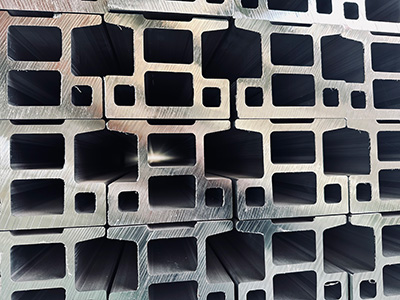 Aluminum Extrusions
 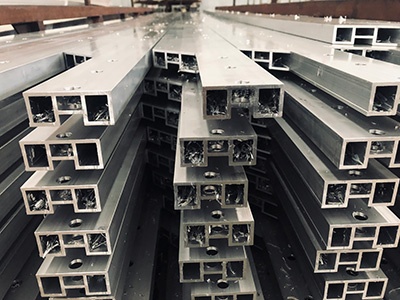 Fabrication
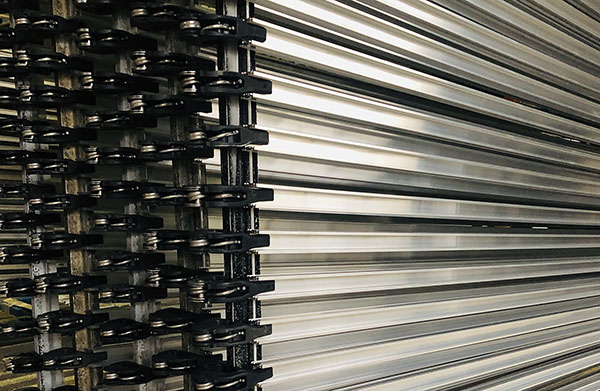 Surface Finishes
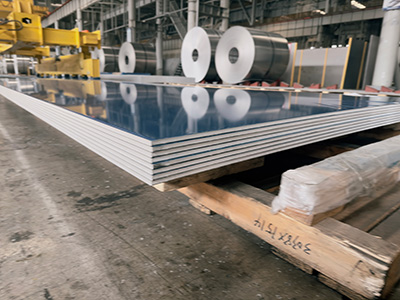 Flat Rolled Aluminum