TX51: Applicable to plate, rolled or cold-worked bar, forgings, and other products. Stress relief is achieved by stretching 1%–3% for plate and bar, or 1%–5% for forgings, with no subsequent straightening. For example, 7075-T651 plate undergoes stretching of 0.5%–2% after solution heat treatment, quenching, and artificial aging to relieve residual stresses and improve dimensional stability. It is used for aerospace structural components and high-precision mechanical parts. 2014-T651 forgings undergo 1%–5% stretching for stress relief and are used for high-load mechanical components.
TX510: Applicable to extruded bar, profiles, tubes, and drawn tubes. Stretching is typically 1%–3% for extruded products or approximately 3% for drawn tubes, with no subsequent straightening. For example, 6061-T6510 extruded profiles, used in building structures and automotive frames, offer improved dimensional stability after stress relief. 7050-T6510 extruded tubes are suitable for piping in aircraft hydraulic systems.
TX511: Applicable to extruded bar, profiles, tubes, and drawn tubes. After stretching, limited straightening may be performed to meet standard dimensional tolerances. For example, 6063-T6511 extruded profiles, used for door and window frames and decorative trim, combine stress relief with dimensional accuracy. 2024-T6511 drawn tubes are suitable for aircraft fuel lines.
TX52: Stress relief is achieved through 1%–5% compression. For example, 2014-T652 hand forgings are used for complex-shaped mechanical components, where compressive stress relief can effectively reduce deformation during service.
TX54: Stress relief is achieved through cold die forging and is applicable to die forgings. For example, 7050-T654 die forgings, used for critical components such as aircraft engine mounts, can achieve improved fatigue performance and dimensional stability after stress relief.
Tempers involving modifications to the quenching method:
T61: Indicates the use of boiling-water quenching instead of conventional cold-water quenching to reduce residual stresses. For example, 2014-T61 forgings can benefit from reduced internal stress gradients and a lower risk of cracking through boiling-water quenching, making them suitable for forgings with complex geometries and uneven wall thicknesses. A206-T61 castings can achieve improved dimensional stability through boiling-water quenching and are suitable for high-precision mechanical castings.
T611: Indicates that the quenching medium has been modified to provide properties intermediate between T6 and T61. For example, 2024-T611 forgings are suitable for components requiring a balance between residual-stress control and mechanical properties.
Tempers in which heat treatment is performed by the user (TX2):
T42, T62, T7X2, and related tempers indicate that the heat treatment is performed by the user rather than the original producer. For example, 7075-T62 die forgings may undergo solution heat treatment and artificial aging at an aircraft manufacturer or an outsourced heat-treatment facility to meet specific mechanical-property requirements, making them suitable for aircraft landing-gear components. 6061-T42 plate may be solution heat-treated and naturally aged by the user according to specific requirements for customized mechanical structural components.
Tempers involving additional cold work before or after aging:
T361, T861: Indicate that additional cold working is performed after solution heat treatment and before aging to achieve higher strength. For example, 2024-T361 plate undergoes a greater degree of cold work than that associated with simple straightening or leveling and is suitable for aircraft skins and wing structural components requiring very high strength. 2024-T861 plate, after solution heat treatment, cold working, and artificial aging, achieves further increases in strength and is suitable for aircraft fuselage reinforcement components.
T9: Indicates that cold working is performed after artificial aging. For example, 6262-T9 bar is used to manufacture high-strength bolts, nuts, and other fasteners. 6061-T94 wire is suitable for components such as springs and wire ropes that require high elasticity and strength.
Special corrosion-resistant tempers (T73, T76):
T73: Involves overaging to improve resistance to stress corrosion cracking (SCC), with an approximately 15% reduction in yield strength. For example, 7075-T73 plate is used for structural components in marine environments and load-bearing aerospace components, where it provides effective resistance to SCC. 7050-T7351 plate is suitable for aircraft fuselage longerons, combining relatively high strength with excellent SCC resistance.
T76: Involves overaging to improve resistance to exfoliation corrosion. Yield strength is approximately 5%–10% lower than in the T6 temper but higher than in T73, while SCC resistance is lower than that of T73. For example, 7075-T76 extruded profiles are used in building curtain walls and bridge structures, where strong resistance to exfoliation corrosion is required in humid environments. 7175-T76 forgings are suitable for high-end automotive components.
Special or enhanced-performance tempers (T74, T66, etc.):
T74: Used for applications requiring a combination of high strength, high fracture toughness, and good corrosion resistance. For example, 7175-T74 die forgings are used for aircraft engine turbine blades and critical landing-gear components, offering better fracture toughness and corrosion resistance than conventional T6 temper products. 7050-T7454 die forgings, through stress relief and special aging treatment, provide excellent overall performance and are suitable for critical aerospace structural components.
T66: Indicates a special treatment designed to achieve maximum strength. For example, 7175-T66 forgings are used for specialized equipment components where extremely high strength is required.

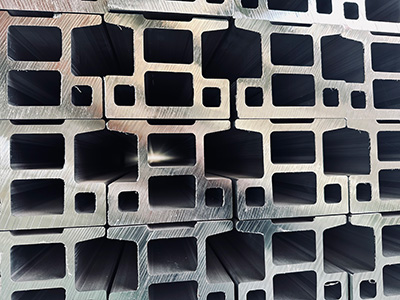 Aluminum Extrusions
 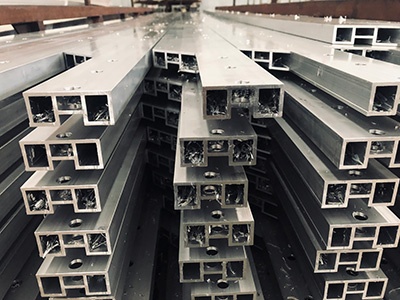 Fabrication
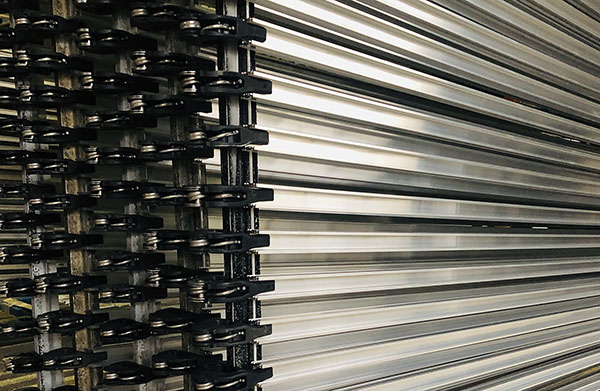 Surface Finishes
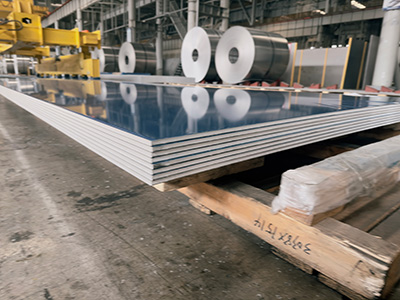 Flat Rolled Aluminum